Agent production is worked out from your MLS’s own listing records: each listing’s sale price and dates, and the agents your MLS has on the seller’s side and the buyer’s side. You see it in two places that count differently:
- The Agents list ranks agents on their sales in one market and period. See Rank agents in a market.
- An agent’s page shows every sale your MLS has recorded for them, year by year. See Look up an agent.
The definitions below apply to both unless they say otherwise. Claude and ChatGPT get the same figures as an agent’s page.
Whose sale it is
Sale
A listing that closed, with its sale price recorded in your MLS. A home under contract counts once it closes. Listings that are still for sale, expired or were withdrawn aren’t sales, though they’re shown under Listings on the agent’s page.
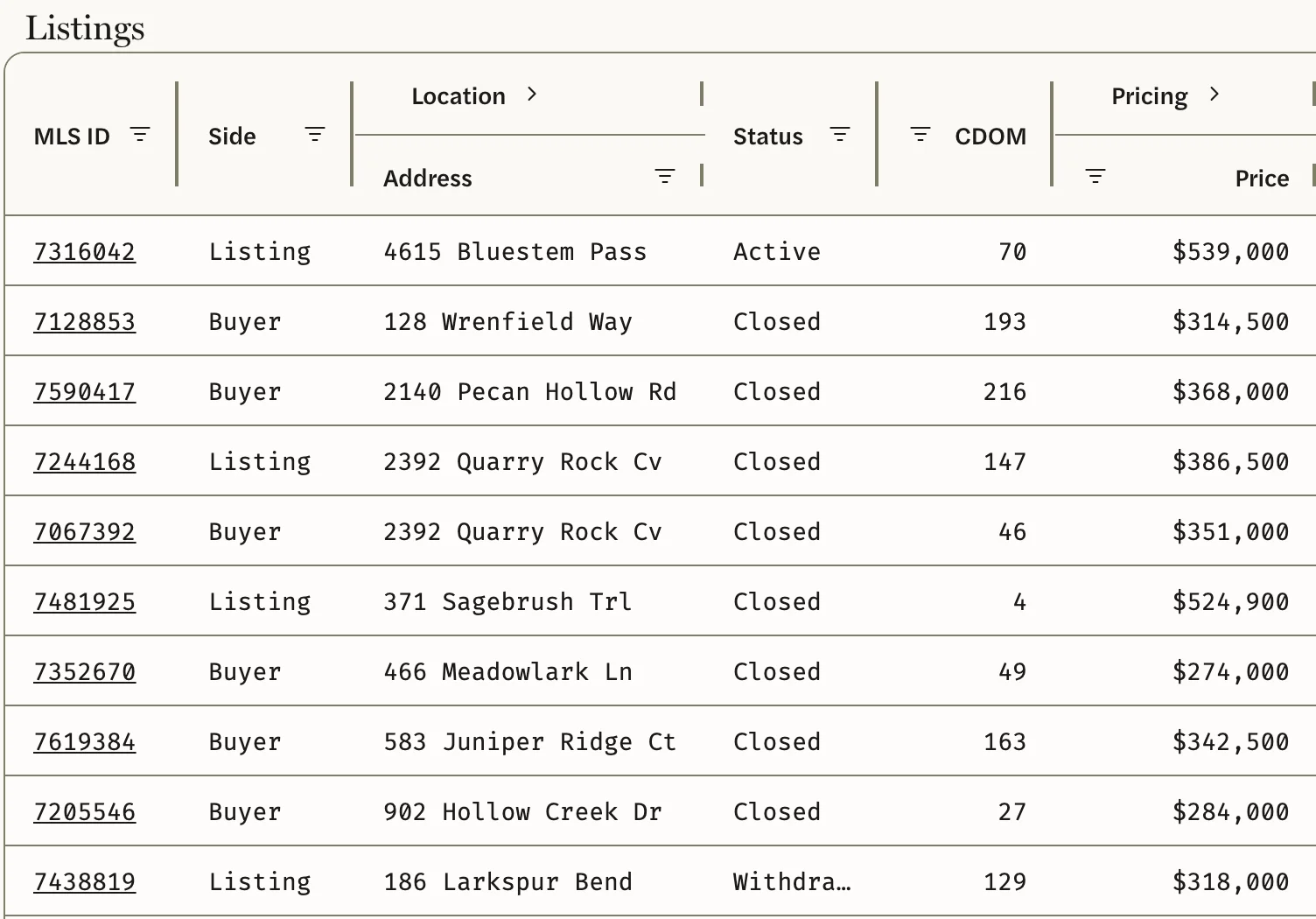
Listing side and buyer side
A sale is on an agent’s listing side when your MLS has them as its listing agent or co-listing agent, and on their buyer side when it has them as the buyer’s agent or co-buyer’s agent. Only the agents your MLS names on a listing get credit for it: a sale recorded under one team member’s name counts for that agent, not for the rest of the team.
Shared sales
Every agent on a sale is credited with the full sale price. When a listing agent and a co-listing agent share a sale, each of them gets one unit and the whole price. So adding up several agents’ Volume, such as everyone at one brokerage, counts a shared sale more than once, and the agents in a market add up to much more than the market’s Sales Volume, which counts each sale once.
One agent on both sides
When one agent represented both the seller and the buyer, the sale counts twice in their Total: two units, and twice the sale price.
The figures
Volume
The combined sale price of the agent’s sales.
Units
The number of the agent’s sales, with each side counted separately as described above.
Average
Volume divided by Units: the agent’s average sale price.
Total, Listing Agent and Buyer’s Agent
Listing Agent covers the agent’s listing side and Buyer’s Agent their buyer side. Total is the two added together.
First Year
On the Agents list, under Details: the year of the agent’s earliest sale in your MLS’s records, in any market and of any property type. It isn’t the year they were licensed, and for a long-serving agent it can be the year your MLS’s records begin.
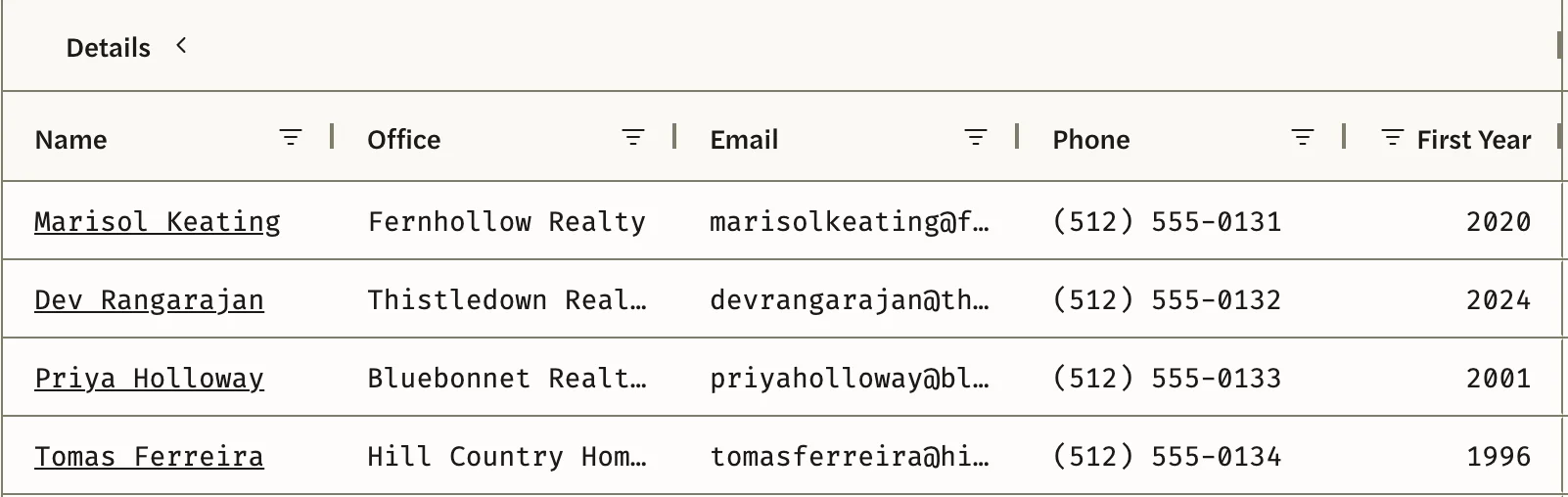
DOM
For the agent’s listing side, the average of each listing’s cumulative days on market: for a sale, the days your MLS counts from listing until the home went under contract, including days on an earlier listing of the same home when it was relisted. It is the same measure as the market statistic Average Days on Market, averaged over a different set of listings in each place:
- On an agent’s page, DOM (avg) averages the listings the agent sold.
- On the Agents list, DOM averages every listing of theirs that left the market in the period, whatever happened to it: sold, under contract and not yet closed, or taken off the market without a sale. So it can differ from the figure on their page, sometimes by a lot.
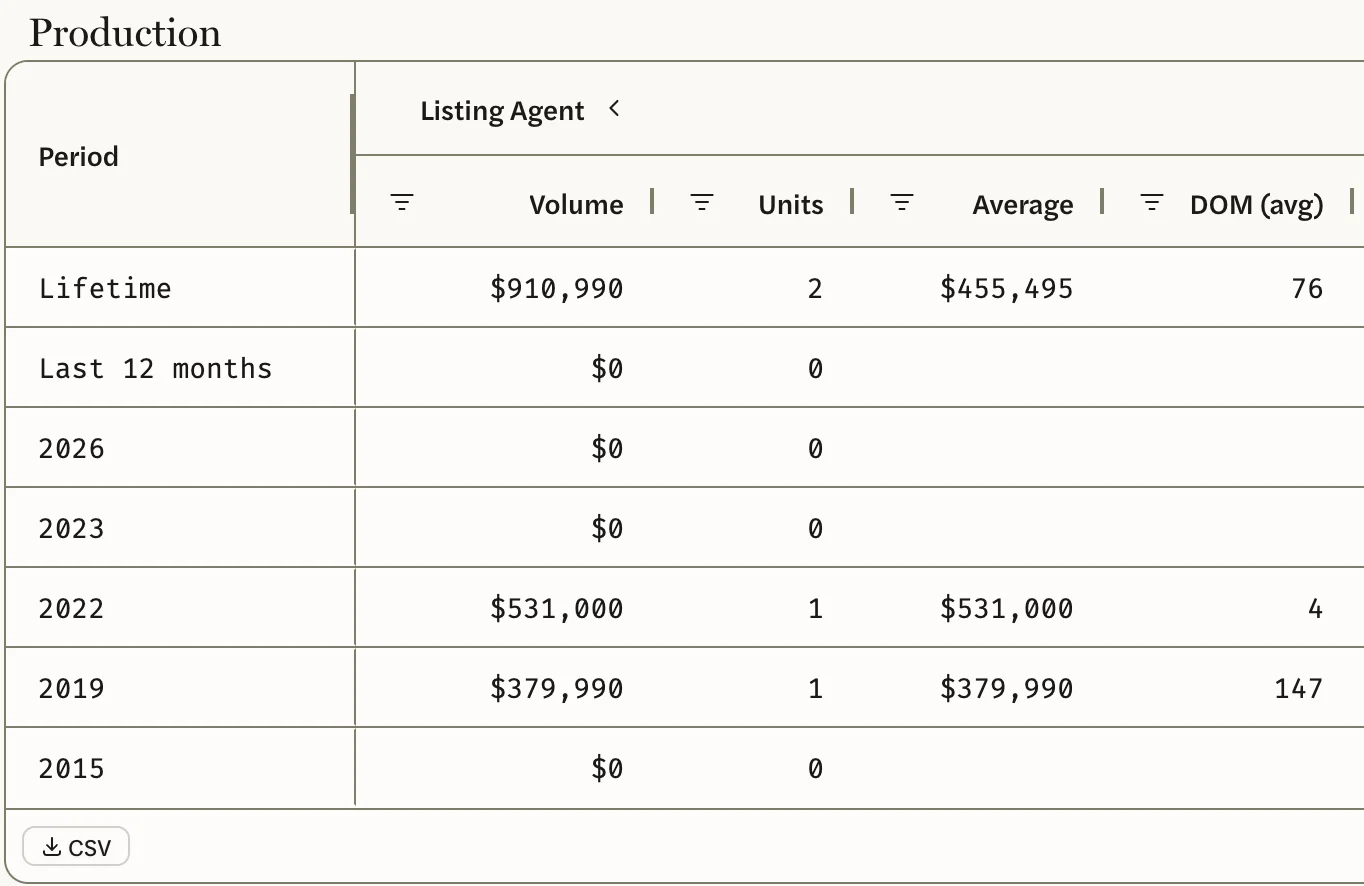
Initial vs Sales Price
For the agent’s listing-side sales, the average percent difference between the sale price and the price the home was first listed at. -3% means their sellers sold, on average, 3% below their first asking price. It takes in both the price cuts before the sale and the final negotiation, which the market statistics show separately as Original vs Asking Price and Asking vs Sales Price. On an agent’s page it is Initial vs Sales Price% (avg).
Asking vs Sales Price
For the agent’s buyer-side sales, the average percent difference between the sale price and the final asking price. -2% means their buyers paid, on average, 2% below asking. It compares the same two prices as the market statistic Asking vs Sales Price, across the sales where the agent represented the buyer. On an agent’s page it is Asking vs Sales Price% (avg).
Both price figures are rounded to a whole percent on screen, and are blank when the agent has no sales on that side.
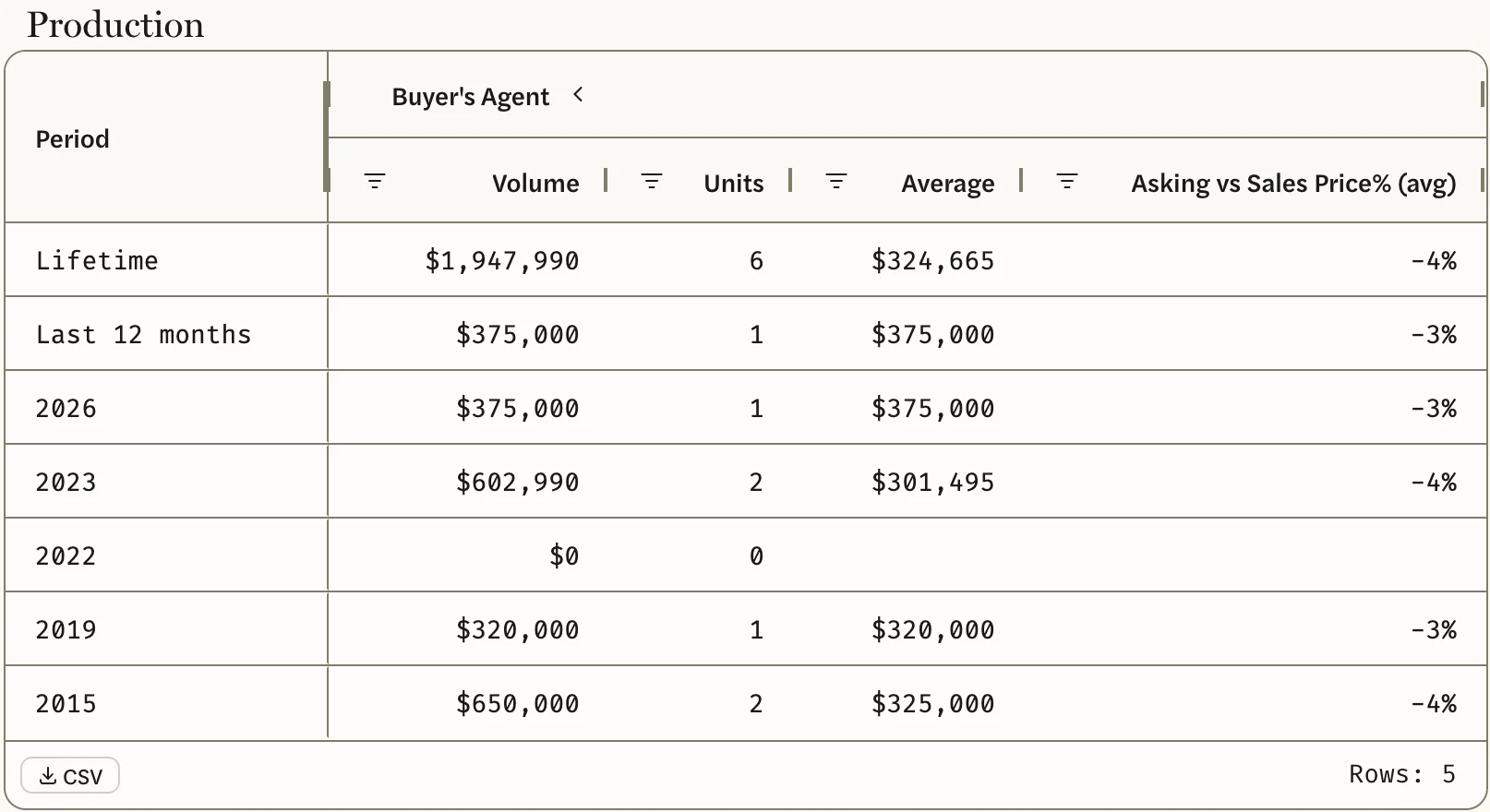
Periods and dates
Periods on the Agents list
12 Months, 2 Years, 3 Years, 5 Years, 10 Years and Lifetime, each running up to today. Lifetime covers the last 30 years.
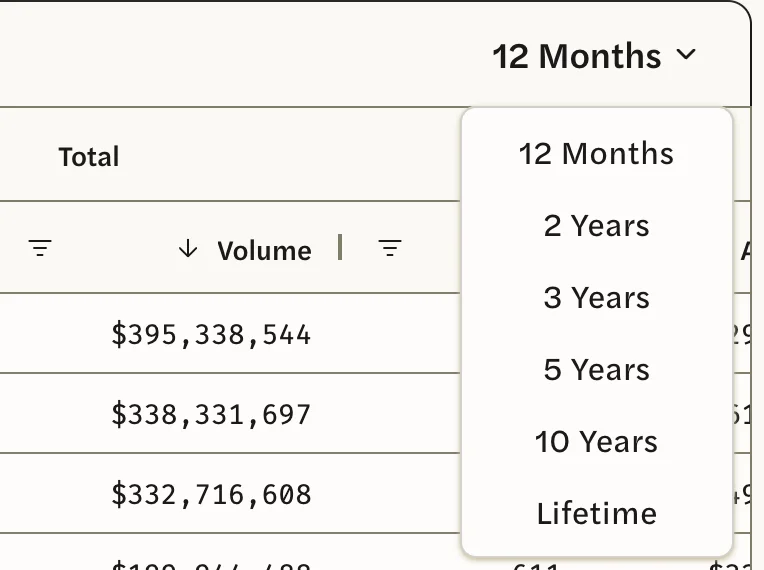
A sale counts in a period by the date its listing went off the market, which for most sales is the day it went under contract, usually some weeks before it closed. A sale that went under contract before the period began isn’t counted, even if it closed inside the period.
Where your MLS’s records go back less than ten years, the list offers only the periods that start after the first sale in those records, so 10 Years and Lifetime aren’t offered.
Periods on an agent’s page
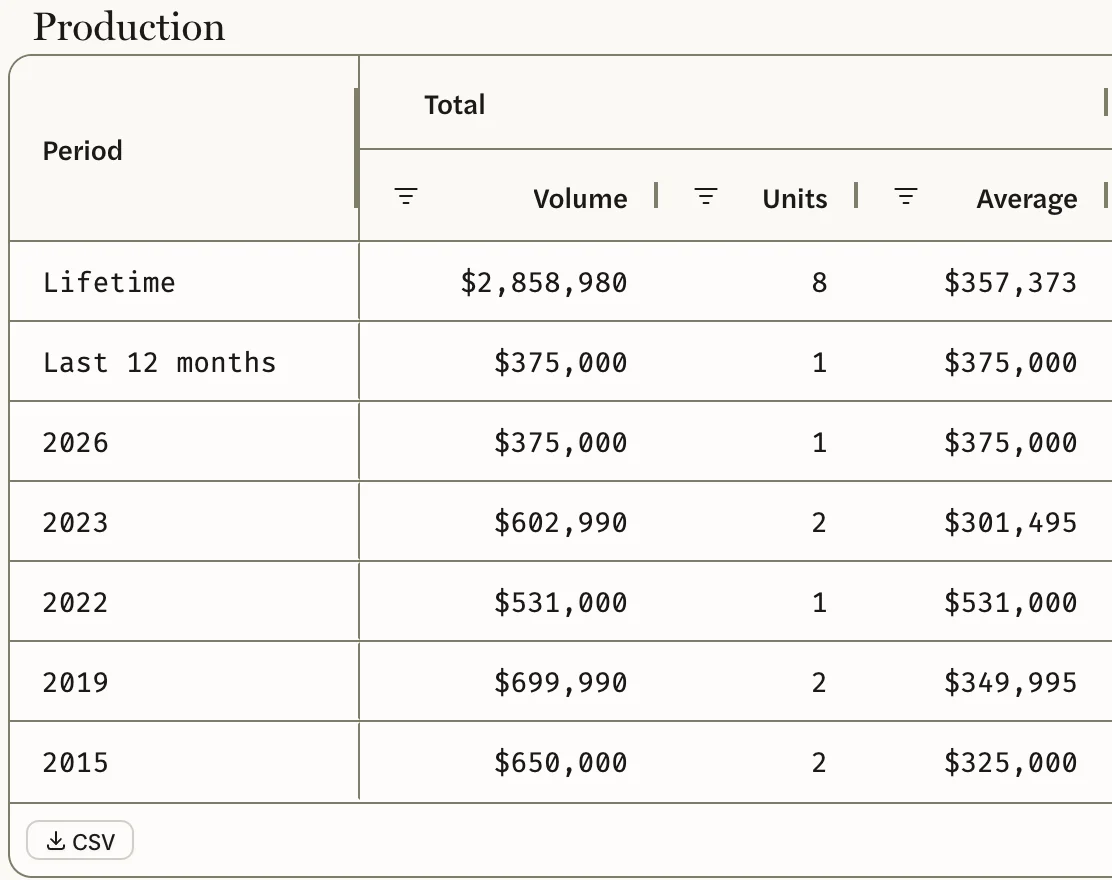
Lifetime covers every sale in your MLS’s records. Last 12 months covers sales that closed in the 12 months up to today. Below them, each row is a calendar year, and years with no sales are left out. On an agent’s page, a sale counts by its closing date.
Agents and offices
Which agents are listed
An agent appears on the Agents list when your MLS lists them as active and at an office, and they had at least one sale in the market and period. An agent who is no longer active in your MLS, or whose record has no office, isn’t listed, but their page still shows what they closed.
Office
Office on the Agents list, and the office at the top of an agent’s page, is the agent’s current office in your MLS. Their figures include every sale that counts, including sales made at a previous brokerage, so an agent who has moved is listed under their new office with their whole record.
The Agents list and an agent’s page
For the same agent, the two rarely show the same figures:
- Market. The list counts only the agent’s sales inside the market you chose. Their page counts every market.
- Property type. The list counts only the kinds of property the market covers. Your MLS’s standard markets cover residential property, so sales of other kinds, such as land, farms, commercial property and multi-unit income property, are left out of the list, and a version such as Condos narrows it further. An agent’s page counts every type.
- Dates. The list places a sale by the date it went off the market, and the agent’s page by its closing date. A sale that went under contract 13 months ago and closed 11 months ago is in the page’s Last 12 months but not in the list’s 12 Months.
- Lifetime. The list’s Lifetime covers the last 30 years; the page’s covers all your MLS’s records.
- DOM. The two average different sets of listings, as described under DOM.
Updates
Agent figures are updated once a day, so a sale your MLS records today shows up the next day. See Where the data comes from and how fresh it is.